
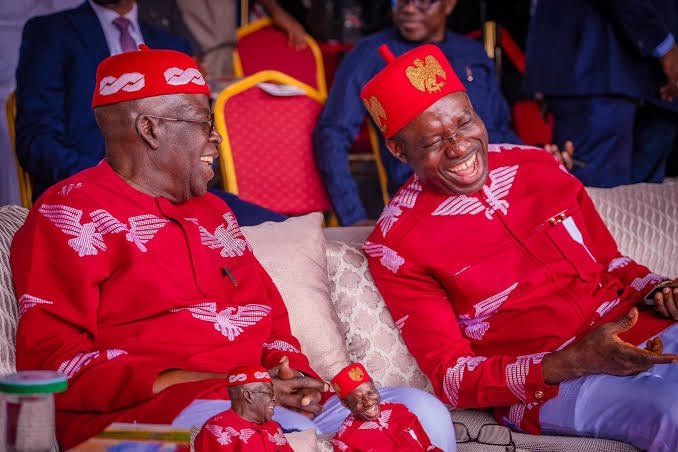
While some parts of the Southeast, particularly Ndi Anambra, remain trapped in a politics of lamentation and protest, President Tinubu and Governor Soludo are quietly but decisively rebuilding the region and attending to the lingering wounds of the civil war.
The facts are not debatable: Ndigbo have long practiced a politics of “nzogbu nzogbu” toward the APC-led Federal Government—a defensive approach that has often prioritized opposition for its own sake over progressive politics and alliances. But even when the Southeast did not vote for the APC government of Buhari, twice and repeated the same in Tinubu’s first term—Buhari showed love by delivering projects and, most importantly, the Second Niger Bridge, a project PDP governments had promised for over 16 years without fulfillment.
Today, President Tinubu has deepened that rebuilding and reconciliation in ways that are impossible to ignore.
Consider the record: Tinubu signed the South East Development Commission (SEDC) into law on July 24, 2024, establishing a permanent vehicle to address decades of post-war neglect and accelerate Southeast growth. The Board was inaugurated on February 12, 2025, with Mark Okoye as the pioneer Managing Director.
In a powerful gesture of inclusion, Tinubu elevated Bianca Odumegwu-Ojukwu as Nigeria’s Federal Minister of Foreign Affairs, a Southeast woman in one of the most exalted cabinet positions. This is not symbolism; it is statesmanship.
Just this morning, while many were still asleep, Soludo announced that Tinubu had approved two major federal highways: the dualization of the 108-kilometre Otuocha–Anam–Abaji road linking Anambra and Kogi states, and the 150-kilometre Oba–Nnewi–Uga–Ihube (Okigwe Junction) road connecting Anambra, Imo, and Abia states to the Enugu–Port Harcourt Expressway. The roads, when fully constructed, are critical game-changers by the man who tamed the Atlantic Ocean in Lagos. Tinubu is certainly redefining politics, and the Southeast won’t be the same again when he completes his two terms.
Beyond roads, Tinubu approved the $3 billion project to reconstruct and modernize the 2,044-kilometer Port Harcourt–Maiduguri Eastern Rail Line. The route connects Port Harcourt through Aba and Enugu. He is also constructing a 17.5-kilometer access road that links the Second Niger Bridge to the Enugu-Onitsha Expressway. The route begins at the Umunya/Ogbunike axis, passes through Ogidi, and connects to the bridge.
Today, the narrative has changed. Tinubu and Soludo are delivering where others merely gestured—infrastructure, economic revival, and a genuine bridge over old divisions. While those who protest keep lamenting, this partnership is quietly turning the page. The Southeast is finally rising, not on protest, but on measurable progress.
And here is the promise: the progressive effort toward the 2027 presidential election will bring even more development to the region: gas infrastructure, expanded rail networks, and fully operational eastern ports. The foundation is laid. The dividends are coming. The question for Ndi Anambra is simple: Will they continue mourning, or will they join the march toward a progressive politics of alliance?
History will be kind to Tinubu, Soludo, and progressives. The Southeast will rise.
